
2026 Exhibition at JAHM - NOW OPEN FOR BOOKINGS!
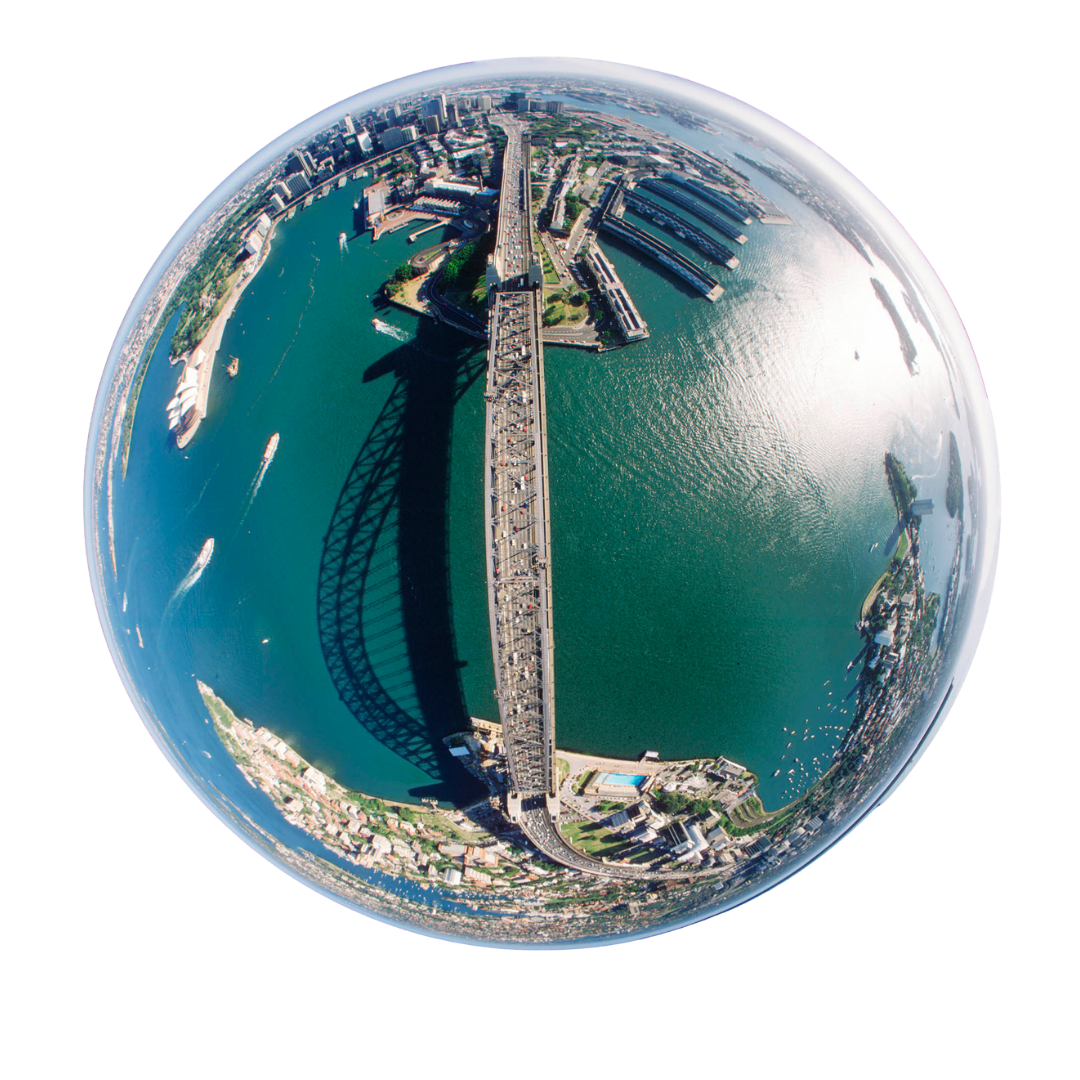

Since photography’s invention in the mid-19th century, photographers have shaped how we see the world through their own subjective choices. Artists quickly embraced photography as a medium for self-expression, pushing it further through experimentation and manipulation.
JAHM’s 2026 exhibition showcases over 50 photo-based works from its collection, revealing how artists transform every stage of the photographic process—with camera, without camera, digitally, and through AI.
While traditional photographers document the world, this exhibition reveals how artists use photography to creatively question and challenge it.
CURATORIAL ESSAY
Written by Charles Justin AM, Justin Art House Museum
PHOTOGRAPHY: Seeing is Believing
We never set out to collect photography.
Our focus was on the work itself, not the medium nor the reputation, gender, ethnicity of the artist.
We collect predominantly emerging artists, expressing abstract or conceptual ideas in their work.
Over 60 works in our collection are photo based, yet the majority do not look like traditional photographs.
These works fall into the category of art-photography that forms the basis of PHOTOGRAPHY: Seeing is Believing.
‘PHOTOGRAPHY and ART
Photography was invented in 1826 by French scientist Joseph Nicéphore Niépce. He created the first permanent photograph, View from the Window at Le Gras, using a camera obscura and bitumen on a pewter plate that required hours of exposure.
JAHM’s exhibition: ‘Seeing is Believing’ fortuitously celebrates the bicentenary of photography.
Following photography’s invention, it appeared to many as an artistic novelty rather than an artistic revolution. Yet its emergence would eventually reorganize the very foundations of visual culture. To understand the unique value and complexity of art photography today - across analogue, digital and AI mediated forms - it is necessary to trace how photography fundamentally altered art’s purpose and how artists, far from resisting the new medium, became some of its earliest adopters and innovators.
Before the 1830’s, painting, drawing and printmaking were the only reliable means to visually record the world. Portraits documented people and dynasties, battle scenes chronicled national triumphs, still life catalogued objects and landscapes gave visual form to places people may never have a chance to visit. The value of art was tied not only to creativity and skill, but also function. A portrait served as both likeness and legacy, a scientific illustration served as evidence, maps and architectural renderings served practical needs. Accuracy was not incidental, it was essential.
To achieve the authenticity of representing the real world, painters devoted centuries to developing techniques of perspective, shading, and anatomy. The Renaissance quest for realism was in large part a quest for optical truth. When camera obscura appeared centuries before true photography, artists eagerly used it as a precision aid. The line between art and instrument was already blurring.
Photography disrupted this equilibrium, because it automated what artists spent a lifetime mastering. Suddenly the world could be inscribed onto a surface with astonishing accuracy. Initially exposure times were long, equipment cumbersome and chemicals unstable, but the principal was clear: the hand was no longer the key mediating force, the creative mind and the machine that captured light was.
The arrival of photography posed an existential question: if a machine can produce a perfect likeness in minutes, what is left for artists to do?
The nineteenth century witnessed two responses. The first was defensive - some critics dismissed photography as mechanical, soulless and unworthy of being considered art. The second was embracing change - artists recognised that photography liberated art from representational duties. Realism was no longer a competitive necessity. The Impressionists arrived not long after, embracing subjectivity, sensation and the artist’s inner vision. The invention of photography did not kill art, it pushed it into unexplored conceptual territory.
By the twentieth century, photography had matured into an independent artistic medium. The Pictorialists intentionally blurred focus and manipulated printing to mimic painterly aesthetics, while Modernists embraced clarity, geometry and abstraction. Artists such as Man Ray and László Maholy-Nagy used darkroom techniques to produce photograms, solarisation effects and other abstract images - demonstrating that photography was not limited to recording appearances, it could generate them.
OBJECTIVITY and SUBJECTIVITY
Photography is often mistakenly described as objective, while art is deemed subjective. This is only partly true. Art is obviously a subjective interpretation, shaped by the artist’s view, technique and intention. But photography also involves choices: context, framing, timing, exposure, lenses, distance, scale and post-production. Even in its earliest decades, photographers manipulated negatives, scratched plates, staged scenes and painted on prints.
The dictum that the ‘camera never lies’ was always a myth. What differentiated art and photography was not subjectivity, but the claim each made about reality. Photography’s power came from its credibility, its images were treated as evidence, which made it indispensable to journalism, science, policing and documentation. However, for artists, photography provided a new medium with which to interrogate truth.
THE DISTINCTION of ART PHOTOGRAPHY
What distinguishes art photography from traditional or documentary photography is not merely subject matter, but the degree of intervention in the process. This included the manipulation of the subject and setting in front of the camera (staging, lighting, casting), manipulating the mechanics of the camera (framing, exposure, focus, movement, settings), photographic production (development, chemicals, printing, cropping), post photographic production (reconstruction, augmentation, adaption). In the digital era, this manipulation extends to pixels and data. Digital technology also allows the appropriation of photographs off the
internet as the raw material for digital manipulation and reconstruction, a forerunner to the operation of AI.
The art photographer becomes not just a witness, but a constructor. The camera and non-camera photographic processes are tools in a chain of artistic intent. This chain is essential in explaining why art photography sits comfortably alongside painting and sculpture in museums today. It is no longer judged by its ability to faithfully reproduce reality, but by the conceptual, emotional and aesthetic experiences it produces.
Once photography assumed the role of documentation, art was liberated to pursue other domains. Modernism, abstraction, conceptualism, performance art and installation art, all emerged in a world where likeness had become technologically routine. Even hyperrealist painters of the late twentieth century relied on photographs as their source material, an ironic reversal that demonstrates photography’s dominance as the default reality reference.
Photography did not merely change how art looked, it changed what art was for. No longer tied to representation, art could interrogate form, sensation, psychology, politics, language, identity and time. Conceptual art in particular emerged from photography’s logic - if a photograph could stand in for an idea, then the idea itself could be the artwork.
DIGITAL and AI
The analogue photograph involved physical limitations - film, paper, chemicals and time. Digital photography obliterated these constraints. The cost of taking 100 images dropped to the cost of taking one, then to zero. Photography became ubiquitous, social and instantaneous. Billions of images now circulate daily, often consumed and forgotten in seconds.
This ubiquity has forced art photography into a new position. When everyone is a photographer, what distinguishes the artist? One answer lies in intent and authorship. Another lies in conceptual framing. A final answer may lie in how contemporary photographic artists creatively
intervene in the photographic process to produce the work that qualifies to be considered art.
The rise of AI generated imagery, trained on a vast database of photographs on the internet, introduces a new rupture. If photography replaced painting’s monopoly on representation, AI now challenges photography’s monopoly on depiction itself. AI can generate scenes that never existed, portraits of imaginary people and landscapes without origin. The belief that a photograph represents something real becomes highly questionable.
For some this threatens the existential foundation of photography. For others it is the next chapter in a long history of technology’s evolution. Artists are again among the earliest adopters, using AI to question authorship, realism, and the politics of datasets. The artist becomes less a maker of images than a designer of codes, systems, prompts and feedback loops. In this case the logic of conceptual art, where the idea outranks the object, continues.
ART
The history of photography and art is not a story of replacement, but a story of redefinition. Painting did not die, it evolved. Photography did not remain mechanical, it became expressive and ambiguous. Digital and AI processes have not destroyed artistic intent, they have simply redistributed where it resides.
What unites painting, analogue photography, digital imagery and AI generated art is not medium but purpose. The desire to reveal how we see, what we remember and what we value. Photography began as a tool for holding fleeting moments, it has become a medium for questioning the nature of reality itself. As long as artists continue to push against the limits of their tools - whether pigment, light or algorithms, art will remain both a witness to its time and a catalyst for what comes next.’
The essay in blue is my heavily edited version of an essay generated by ChatGPT based on the following request:
‘Write a 1500 word essay based on the difference between painting and photography, art before and after the invention of photography, the objectivity and subjectivity in both, how art changed after the invention of photography, how artists were early adopters of photography as a medium for expression, how artists manipulate the photographic process to produce images, and the impact of the digital and AI on art photography.’
I thought such an approach to the essay was an appropriate metaphor to the impact that new technology is having on image making and art practice. Hopefully this will provide food for thought.
JAHM’S 2026 exhibition PHOTOGRAPHY: Seeing is Believing has been curated to demonstrate how artists manipulate the photographic process to create their images.
The following categories are illustrated with the names of the artworks and artists exhibited:
The Distinction between Art and Photography
Charles Justin, Micheila Petersfield
Pre Camera: manipulating the subject and setting
Blurred Filters: Mira Pedlar, Beverly Southcott
Timing: John Gollings, Adrian Boddy
Intervention: Glen Walls
Staging: Mari Hirata
Construct: Rosie Hastie, Daniel von Sturmer
Camera: Manipulating the Machine
Framing: Linda Wachtel
Settings: Shannon McGrath
Lens: John Gollings, Simon Cuthbert
Extended Exposure: David Stephenson
Multiple Exposure: Phil Hart
Camera Movement: Jaime Diaz-Berrio
Film Residue: Robert Owen
Post Camera: Manipulating the Photograph
Reconstructing the Image: Daniel Crooks, Jiang Pengyi, Josh Dykgraff, Catherine Nelson, Lucas Davidson
Photographic Paper: Janina Green, John Bodin, Mira Gojak
Augmenting the Image: Cat Poljski, Bruno Letti, David Thomas, Mami Yamanaka, Tracy Sarrof
Collage: Zoe Croggon
Non Camera: Manipulating the process by deleting the camera
Photogram: Penelope Davis
Sculpting Film: Justine Varga
Substitution: Manipulating Representation
Photography of temporary art installations: Robbi Rowlands, Cameron Robbins, William Mackrell
Digital: Manipulating the Digital Content of Appropriated Photographs
Abstraction: Nathan Jokovich, Paul Snell, Greg Stanford
Collage: Jacob Leary
Reconstructing the Image: Daniel Crooks (video), Greg Neville
AI: Manipulating the Code
Nathan Jokovich
Photography: Seeing is Believing presents a comprehensive exhibition on the diverse and creative ways that contemporary artists manipulate the photographic process to create their images. This focus is on the ‘how’.
As these images make no pretence to literally representing reality, it opens the opportunity for the viewer to interpret the ‘what’. What the artist is saying. It is the distinction between ‘seeing’ and ‘believing’